
What Is Enterprise Data Management? Operationalizing the 5 States of Data
In modern enterprises, data does not sit quietly in dashboard reporting queues waiting to be reviewed. It moves. It flows. It signals critical market changes in real time. Depending on its current structural state—historical, external, operational, streaming, or simulated—data carries a entirely different tier of predictive capability.
To build automated decision systems that generate tangible business value, organizations must master the foundational layers of information processing. This paradigm shift requires a comprehensive approach to handling business information assets effectively.
Understanding Enterprise Data Management
Enterprise data management is the systematic architecture, governance, and orchestration of an organization’s diverse data assets across multiple operational states to power continuous predictive modeling and automated decision intelligence systems.
By treating information as a dynamic, continuous infrastructure rather than a series of static repository endpoints, businesses can successfully bridge the gap between legacy business intelligence and automated execution frameworks.
The 5 Essential States of Enterprise Data
Achieving true competitive differentiation requires orchestrating data across five precise states, each serving a unique objective within the corporate intelligence stack.
1. Batch Data: The Corporate Memory
Batch data represents the historical record of the enterprise. This state encompasses transaction histories, long-term financial ledgers, past customer behaviors, and legacy operational KPIs collected over discrete intervals. It answers a foundational analytical question: “What has already happened?”
This is the environment where predictive models learn baseline behavioral patterns, such as customer churn trends, long-term credit risk indexes, and demand seasonality. However, relying solely on batch infrastructure leaves organizations managing by looking backward.
2. Third-Party Data: External Environmental Context
No business operates in an isolated vacuum. Third-party data providers inject necessary outside context into corporate engines, incorporating macro variables like bureau credit scores, real-time market indices, regional fraud alerts, industry benchmarks, and shifting demographic trends.
While internal repositories illuminate how a customer interacts with your specific products, external data assets reveal how that same customer behaves across the broader economy. This layer allows risk compliance and growth teams to detect systemic vulnerabilities or opportunities invisible to internal systems.
3. Internal Operational Data: Proprietary Modern Signals
Every digital interaction creates micro-signals across proprietary architectures. This includes application logins, subtle payment timing variations, customer support transcripts, direct product usage logs, and digital interface engagement metrics.
These internal behavioral shifts frequently act as leading indicators of macro changes before they ever materialize in formal revenue or risk logs. For instance, a minor but sudden drop in workflow engagement can predict an impending account cancellation weeks in advance, forming the bedrock of modern competitive differentiation.
4. Streaming Data: Instantaneous Intent Detection
Streaming data is generated continuously and processed in milliseconds to reflect active, immediate occurrences. Examples include real-time credit card swipes, ongoing web application clicks, IoT sensor variations, and rapid market fluctuations.
Automated decision environments evaluate these streaming telemetry feeds immediately to approve complex transactions, block ongoing security threats, adjust localized pricing models, or prevent industrial equipment failures. Where historical systems predict general probabilities, streaming analytics detect explicit, instantaneous intent.
5. Synthetic Data: Simulated Futures
Synthetic data consists of artificially generated operational scenarios utilized to model events, parameters, and stresses that may not yet exist within recorded corporate history. It shifts the primary analytical prompt to: “What could potentially happen next?”
Enterprises leverage synthetic environments to stress-test financial infrastructure against sudden economic downturns, generate rare fraud variants for machine learning training, simulate extreme supply chain logjams, and prepare automated systems for unprecedented market edge cases.
Orchestrating the Enterprise Nervous System
The true power of modern corporate data strategy does not stem from managing any single data state in isolation. Maximum impact occurs when an organization orchestrates all five dimensions simultaneously: matching historical patterns with external variables, localized operational workflows, live streams, and simulated risk forecasts.
“Together, these synchronized frameworks function as an enterprise nervous system—sensing, predicting, learning, and acting continuously across decentralized market environments.”
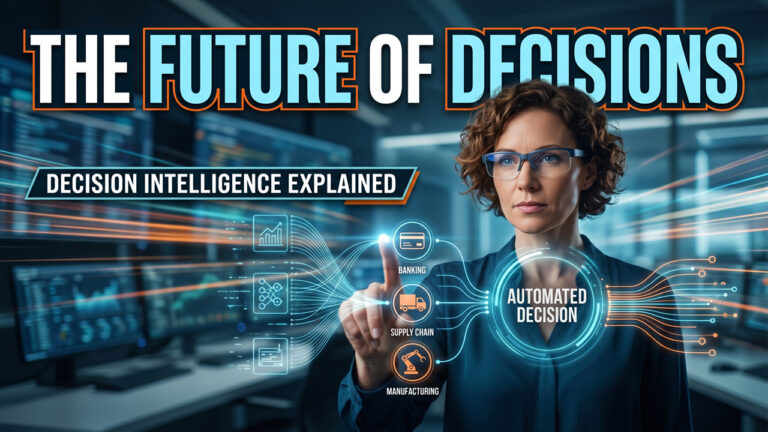
Organizations that master this orchestrational capability successfully transition from conventional analytical reporting to true Decision Intelligence. In a highly volatile macroeconomic climate, transforming raw information assets into autonomous, operationalized intelligence is the ultimate sustainable competitive advantage.
Ready to collaborate on modern data architecture patterns and build production-grade decision frameworks? Join the technical discussion with enterprise engineers and AI architects in the DecideWise Community today.