

Integrating Low-Code and No-Code Platforms into Decision Intelligence
Integrating low-code no-code decision intelligence capabilities into modern enterprise architecture allows organizations to bypass traditional development bottlenecks. By leveraging Low-code/No-code Platforms, non-technical users can actively participate in AI project management without writing complex code. This approach accelerates the deployment of analytical models and ensures critical insights are accessible across all business units.
What Is Low-Code / No-Code Decision Intelligence and How Does It Work?
Low-code / No-code decision intelligence refers to the integration of accessible, visual development environments into advanced decision-making frameworks. These platforms enable business analysts and operational leaders to build, deploy, and refine decision models using drag-and-drop interfaces rather than traditional programming. This paradigm bridges the gap between data science teams and business stakeholders, accelerating enterprise-wide adoption.
Why Enterprises Combine Low-Code Platforms with Decision Intelligence
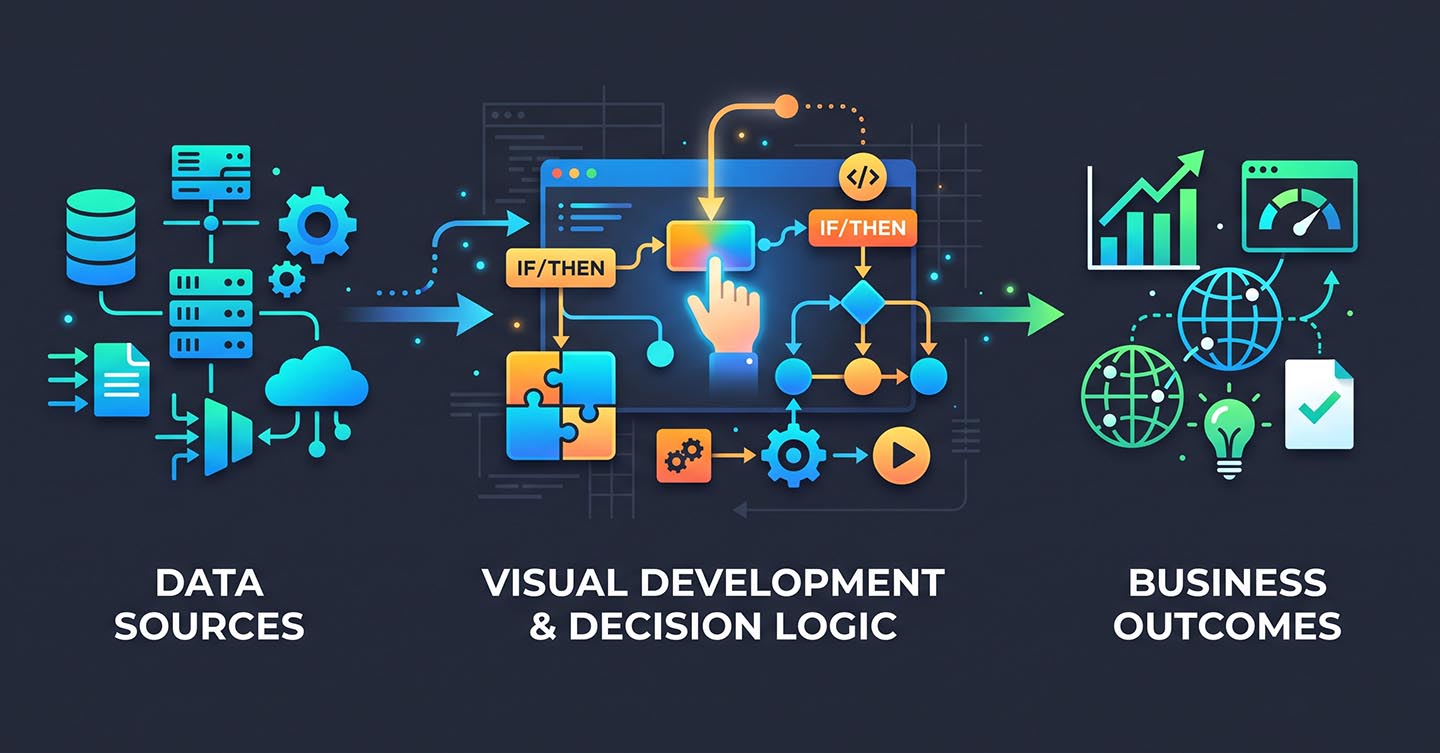
The primary advantage of embedding these capabilities lies in robust data democratization and faster time-to-value. When business domain experts can directly manipulate decision models through Low-code / No-code platforms, organizations reduce their reliance on constrained IT resources. Building on this, such environments foster rapid prototyping, allowing enterprises to test and iterate on decision pathways in real-time, thereby reducing the overhead traditionally associated with AI project management.
“By 2025, 70% of new applications developed by organizations will utilize low-code or no-code technologies, a significant increase from less than 25% in 2020.” – Gartner (Joget)
Key Architectural Components of an Low-Code Decision Intelligence Platform
To successfully drive business outcomes, these systems typically incorporate several foundational components:
- Visual Workflow Builders: Intuitive drag-and-drop interfaces that map complex decision logic without manual coding.
- Pre-Built Connectors: Native integrations that seamlessly pull in structured and unstructured data from various enterprise systems.
- Automated Governance Controls: Built-in compliance checks and audit trails that ensure secure, traceable low-code no-code decision intelligence deployments.
- Template Libraries: Reusable algorithmic models and logic trees that expedite the creation of new decision workflows.
How Industry Leaders Apply Low-Code Decision Intelligence in Practice
Across industries, organizations are utilizing these platforms to solve complex operational challenges. In supply chain management, logistics teams use visual interfaces to dynamically adjust routing decisions based on real-time weather and traffic data. Similarly, in financial services, risk managers can rapidly deploy new fraud detection rules by adjusting visual logic flows rather than waiting for software engineering cycles. In practice, this agility significantly lowers the cost of change.
“By 2026, 80% of low-code users will come from non-IT departments, highlighting a shift towards business-led development.” – Gartner (Joget)
Stay Ahead of the Decision Curve: Join enterprise architects and analytics leaders receiving the DecideWise Decision Intelligence Newsletter—a weekly breakdown of practical architectural frameworks, low-code orchestration models, and enterprise AI governance strategies.
How to Implement Low-Code Decision Systems Without Platform Sprawl
Deploying these systems effectively requires a precise balance between user empowerment and centralized control. Establish clear governance guardrails to prevent platform sprawl and ensure that all visually built models adhere to corporate security standards. Implement robust training programs that elevate the data literacy of business users, ensuring they understand the underlying decision logic. Finally, foster cross-functional collaboration, allowing IT to manage the infrastructure while business teams drive the application logic.
Key Takeaways: Democratizing Enterprise Decision-Making with Low-Code Solutions
- Integrating visual development tools accelerates the deployment of data-driven workflows.
- Empowering business users through accessible interfaces drives substantial data democratization.
- Strong governance and cross-functional collaboration are critical to prevent technical debt and ensure secure deployments.
Visit the DecideWise Community for deeper insight on this decision intelligence article and community-led topic.